Ship or Sheep? The English Vowel Pairs That Cause the Most Misunderstandings
Five vowel pairs cause most misunderstandings in English. Here is what your mouth does differently in each one, and how to drill them in ten minutes a day.
 How to Choose an Online English Tutor (A Checklist From a Tutor)10 min read
 How Much Does Accent Reduction Coaching Cost in 2026?9 min read
 Is Accent Reduction Worth It? What Actually Changes (and What Doesn't)9 min readAll articles
  Glottal T | 5 Minute American English Pronunciation PracticePractice video
 Flap T | 2 Minute American English Pronunciation PracticePractice video
 P vs B | 4 minute English Pronunciation PracticePractice videoAll videos
  Work with AshleyBook your first lesson50 minutes, one-on-one, $25. Live calendar in your timezone.Book now
By Ashley Curry · 10 min read · Updated July 31, 2026
Work with AshleyBook your first lesson50 minutes, one-on-one, $25. Live calendar in your timezone.Book now
By Ashley Curry · 10 min read · Updated July 31, 2026
Small talk in American English is a script with about ten moves. Once you know the moves, it stops feeling like a test. Here is what Americans actually say at the coffee machine, at the start of a video call and at a party, and how to say it so you sound relaxed instead of rehearsed.
American small talk follows a predictable pattern: a greeting that is not a real question ("how's it going?"), one light topic that is safe for anyone (the weekend, the weather, food, travel, or the thing you are both looking at), one or two follow-up questions, and a clean exit ("anyway, I should let you go"). It is not an exchange of information. It is a signal that you are friendly and easy to work with. To sound natural, answer "how are you?" in two words plus a question back, use contractions, keep your pitch moving, and learn a few real phrases like my bad, for real and no way, used in the right setting.
Students from several countries have told me the same thing in their first lesson: "Americans ask how I am and then walk away before I answer." That is not rudeness. It is a misunderstanding about what the words are for. In American English, the opening exchange is a ritual, like a handshake. The content is almost zero. The message is: I see you, I am friendly, we are fine.
Once you accept that, everything gets easier. You are not being asked to be interesting. You are being asked to send the same signal back, quickly and warmly, and then either continue for a minute or two or move on. Both are fine. The mistake my students make is treating the ritual as an interview: pausing to think, giving a detailed honest answer, or worse, saying nothing because they are still translating.
The second thing to understand is that Americans do small talk with everyone, including strangers in an elevator and the person scanning their groceries. If you are new to the US, this is one of the biggest daily adjustments, and I cover the rest of them in my guide to the English nobody teaches you before you move.
There are half a dozen versions of the American opener, and they all want the same response:
| They say | You say |
|---|---|
| How's it going? | Good, how about you? |
| How are you? | Pretty good! You? |
| What's up? | Not much. What's up with you? |
| How've you been? | Busy, but good. How've you been? |
| Hey, how are ya? | Hey! Doing well, thanks. |
Two words and a question back. That is the whole formula. Good is the standard answer even when things are not good; "fine" sounds a little cold to American ears, and "I'm well" sounds formal. If you actually want to share something, do it after the ritual, not instead of it: "Good! Actually, kind of tired, we moved apartments this weekend."
Notice the pronunciation, too. Nobody says "How is it going?" with every word clear. It is "how's it GOing," with the stress on the first syllable of going and everything before it squeezed together. Learning to hear and use contractions the way native speakers do makes a bigger difference to how natural you sound than any single vocabulary item. "I am good" sounds like a robot. "I'm good" sounds like a person.
After the greeting, you need one topic. Americans reach for the same short list, and you can too. The weather, because nobody can disagree with it. The weekend, either the one coming or the one just finished. Food, especially anything nearby or anything the other person is eating. Travel and vacations. Sports, if you know the local team. And the shared situation: the long line, the slow elevator, the meeting that started late, the conference coffee.
The list of topics to avoid is shorter but matters more. Money (salary, rent, what something cost), politics, religion, someone's weight or appearance, and direct questions about age or marital status. Many of my students come from cultures where "how much do you pay for your apartment?" is a normal friendly question. In the US it is a conversation-ender.
Work is a partial exception. "What do you do?" is one of the most common American questions, and it is a genuine invitation to talk for a minute about your job. Have a two-sentence answer ready that a non-specialist can understand, and end it with a question back.
Most textbooks teach small talk that almost no American actually uses. Here are phrases my students hear every day, with the setting where each one fits. Register matters: a phrase that sounds warm with a colleague can sound strange with a client.
| Phrase | Meaning | Where it fits |
|---|---|---|
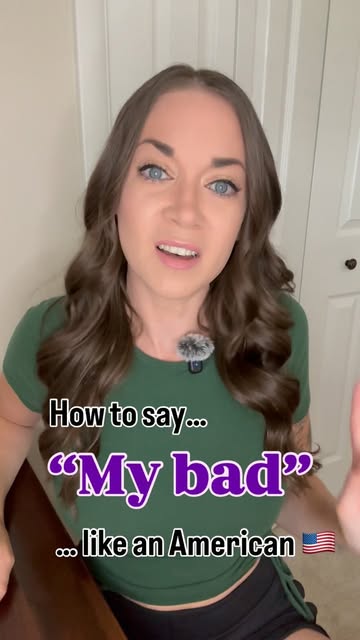
| My bad | Sorry, that was my mistake (small mistakes only) | Colleagues, friends. Not for a client or a serious error. |
| For real? / For real. | Really? / I mean it. | Casual. Fine at work among peers. |
| No way! | I can't believe it (surprise, usually positive) | Almost anywhere. Very common. |
| I know, right? | I agree completely | Anywhere casual. Signals you're on the same side. |
| Dude / bro | Friendly address | Friends, close coworkers. Never a boss or client. |
| Y'all | You (plural) | Southern and Texan; friendly and now widespread. Fine at work in the South. |
| It is what it is | Nothing can be done, let's move on | Anywhere. Ends a complaint gracefully. |
Two warnings. First, do not use five of these in one conversation. Natural speakers use one or two, and the rest of their speech is ordinary. Second, tone changes meaning. "Good for you" with a warm rising pitch is a compliment; with a flat falling pitch it is sarcasm. I have a full breakdown of what these expressions really mean and when not to use them, built from the phrase videos on my channel.
This is the part that students cannot hear in their own speech, and it is the first thing I work on when someone tells me Americans seem cold to them. Small talk carries almost no information, so the entire message is in the melody. A "how's it going" said on one flat note sounds bored or annoyed, however friendly you feel inside. The American version moves: it starts mid, drops slightly, and rises on "going."
The same is true of your answers. "Good" on a single low note sounds like "leave me alone." "Good!" with a quick rise and fall sounds like you mean it. Native speakers are reading this melody constantly and unconsciously, and a speaker whose pitch does not move gets labeled as reserved or difficult without anyone knowing why.
The practice is simple but feels silly: exaggerate. Record yourself saying "Hey, how's it going? Good, you?" and make the pitch move twice as much as feels natural. Play it back. It will sound normal, not exaggerated, because your own ear is calibrated to your first language. My guide to intonation and how "good for you" changes meaning goes deeper into the patterns.
A small talk exchange dies when one person gives an answer and the other person has nothing to attach to. The skill that keeps it alive is the follow-up question, and it is easier than starting a new topic because the other person has already given you the material.
Listen for the detail and ask about the detail. "I went hiking this weekend." Do not say "nice" and stop. Say "Oh nice, where'd you go?" Then: "Is that far from here?" Then: "Do you go a lot?" Three follow-ups from one sentence, and you never had to think of a topic. This is the single behavior that makes Americans describe someone as "easy to talk to."
Useful follow-up frames that work for almost anything:
If you are someone who freezes in these moments, the problem is usually not your English but the fear of getting it wrong in real time. That fear shrinks with low-stakes repetition, and small talk is the lowest-stakes speaking there is. I wrote about how speaking confidence is built rather than found, and small talk is where I usually tell students to start.
Ending small talk is a skill Americans take seriously, and doing it badly is more noticeable than starting it badly. The rule is: signal, reason, warm close. Never just stop and walk away, and never let it trail off into silence.
Anyway and well at the start of a sentence are the signal that you are wrapping up. Every American hears them that way. "I'll let you go" is a polite fiction that pretends the other person is the busy one, and it works in every setting from the office to the school gate. "Have a good one" is the universal casual goodbye.
Choose one ritual opener and one answer, and use them with everyone for seven days: the barista, the neighbor, the person who joins the video call first. Two words and a question back, with your pitch moving. Then pick one safe topic and one follow-up frame and try to get three exchanges deep with at least one person a day.
Record yourself once, saying "Hey, how's it going? Good, you? Did you have a good weekend?" Listen only for the melody. If it is flat, exaggerate and record again. That recording is also a good thing to bring to a lesson, because the intonation habits you cannot hear are exactly what I hear in the first five minutes. You can book a first lesson for $25 and we will work on your real situations, not a textbook dialogue. Lesson options and prices are in the pricing section.
"Good, how about you?" or "Pretty good, you?" Two words and a question back. It is a greeting, not a real question, so a long honest answer sounds strange. If you want to share news, do it after the ritual: "Good! Actually, we just got back from Chicago."
With colleagues at your level, yes, in moderation. With clients, senior managers or in written communication, no. One or two casual phrases in a conversation sounds natural; five sounds like an act. When in doubt, listen to how the people around you speak and match the most senior person in the room.
Because the opening question is a ritual, not a request for information. "How's it going?" while walking past means "hello, I'm friendly." The right response is a quick "good, you?" with a smile. Nobody is being dismissive; they are following a script you now know too.
Money in any form (salary, rent, prices of personal things), politics, religion, weight or appearance, age and relationship status. Health beyond a passing cold is also personal. Weather, weekends, food, travel, sports and the shared situation are always safe.
Signal, reason, warm close. Start with "anyway" or "well," give a light reason ("I should get back to it"), and finish warm ("good talking to you"). "I'll let you go" is the classic version and works everywhere.
It is one of the most useful things to practice, because it is the English you use most often and the one where intonation matters most. In lessons we run the real situations you face, I correct the melody and the phrases in real time, and you leave with a short script you can use the same day.
Five vowel pairs cause most misunderstandings in English. Here is what your mouth does differently in each one, and how to drill them in ten minutes a day.
Americans do not hear the T in can't. They hear a long vowel and a stressed beat. Here is how to say can and can't so the meaning always lands.
English spelling is a history book, not a pronunciation guide. The silent letters that follow rules, the words that follow none, and how to stop trusting it.
Private American English coaching with Ashley Curry: pronunciation, accent and confidence, built around your goals.