English for Tech Professionals: Standups, Code Reviews and Being Heard
Technical word stress, a 45-second standup structure, code-review phrasing and polite disagreement for engineers who are not native speakers.
 How to Choose an Online English Tutor (A Checklist From a Tutor)10 min read
 How Much Does Accent Reduction Coaching Cost in 2026?9 min read
 Is Accent Reduction Worth It? What Actually Changes (and What Doesn't)9 min readAll articles
 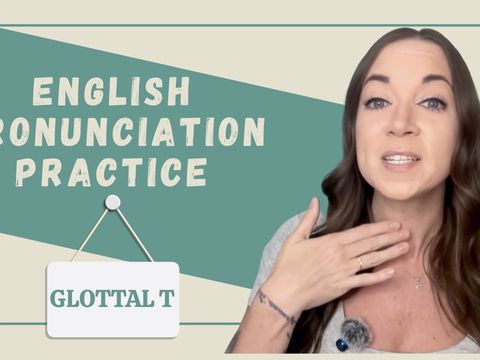 Glottal T | 5 Minute American English Pronunciation PracticePractice video
 Flap T | 2 Minute American English Pronunciation PracticePractice video
 P vs B | 4 minute English Pronunciation PracticePractice videoAll videos
  Work with AshleyBook your first lesson50 minutes, one-on-one, $25. Live calendar in your timezone.Book now
By Ashley Curry · 10 min read · Updated July 19, 2026
Work with AshleyBook your first lesson50 minutes, one-on-one, $25. Live calendar in your timezone.Book now
By Ashley Curry · 10 min read · Updated July 19, 2026
Every one of these expressions is easy to understand and easy to misuse. The meaning is in the dictionary; the tone, the register and the timing are not, and those are what make a learner sound natural or slightly off.
American slang explained in one paragraph: my bad is a light, casual apology for a small mistake. For real means "seriously" or "really?" and works as both a statement and a question. No way means "I can't believe it" or "absolutely not," and the melody tells you which. Bless your heart is genuine sympathy in some mouths and polite Southern insult in others. Dude, bro and y'all are friendly address forms with clear regional and age limits. Use these with friends and relaxed coworkers, keep them out of emails and interviews, and copy the intonation before you copy the words.
My students almost never use slang incorrectly in the dictionary sense. They use it with the wrong melody or in the wrong room. A student says "my bad" to a client after missing a deadline. Another says "for real" with flat intonation and it sounds like a complaint. A third says "bless your heart" to a friend in Dallas and gets a strange look, because in Texas that phrase has teeth.
So this guide gives you three things for each expression: what it means, what the voice does, and where it is safe. If you have watched my short phrase videos on YouTube, this is the longer version of the same idea. Hear it, copy the pitch, then use it.
My bad means "that was my mistake." It is an admission, not really an apology, and it belongs to small, low-stakes situations: you bumped someone, you sent the wrong file, you forgot to mute yourself on a call.
The intonation is short and falls at the end: MY bad, with the pitch dropping on bad. Said quickly with a small smile, it says "I noticed, I own it, let's move on." Said slowly, or with a rising tone, it sounds sarcastic, as if you do not think it was your fault at all.
Where it is safe: friends, teammates you know, casual chats. Where it is not: a client, your manager's manager, anything written and formal, and any mistake that actually cost someone something. For those, "I apologize, that was my mistake" is the right register. I spend time on this contrast in lessons for people in customer-facing jobs, because a casual "my bad" to an angry customer makes things worse, not better.
| Situation | Say |
|---|---|
| You interrupted a colleague on a call | "Oh, my bad, go ahead." |
| You sent the wrong attachment to a client | "Apologies, wrong file. The correct one is attached." |
| You stepped on a stranger's foot | "Sorry!" ("My bad" is fine too if they are young and relaxed.) |
| You missed a deadline | "That's on me. Here's how I'll fix it." |
For real has three jobs, and the pitch tells them apart.
for REAL?for REAL.The pronunciation detail: in fast speech for reduces to fer or even f', so you will hear f'REAL. Do not say FOR REAL with two equal stressed words; it sounds like you are reading it.
Safe with friends and casual coworkers, fine in texting, avoid in anything formal. In a meeting, "Seriously?" or "Really?" does the same job.
No way means two very different things.
Disbelief: "She's moving to Tokyo?" "No way!" Here the pitch rises then falls sharply on way: no WAY, big and open, with the eyebrows up. It is positive or at least neutral. It means "That's amazing" or "I can't believe it."
Refusal: "Can you cover my shift Saturday?" "No way." Here both words are low and flat: NO way, short, pitch falling. It means "Absolutely not." It is blunt. With friends it is fine; with a colleague it sounds rude unless you soften it: "No way, I'm out of town, sorry."
Students confuse these because they learn the words without the tune. When I teach it I play the same two words with both melodies and ask the student to tell me which one was the refusal. Most cannot on the first try, and that is the whole lesson: intonation carries the meaning, not the vocabulary.
Two relatives you will also hear: "No way, really?" which is always disbelief, and "There's no way" which means "it's impossible," as in "There's no way I'm finishing this by five."
This one deserves a warning label. Bless your heart comes from the American South, and it can mean two opposite things.
Genuine: an older woman hears that your flight was cancelled and you slept in the airport. "Oh, bless your heart." Warm, slow, sympathetic. This is real kindness, and you will hear it from grandmothers, nurses and church ladies across Texas, Georgia and the Carolinas.
Sarcastic: someone does something foolish, and a Southerner says "Well, bless your heart" with a little smile. Translation: "You poor, silly thing." It is the politest possible way of saying someone is not very bright. The tell is the context and a slightly sing-song delivery: BLESS your HEART, with a pause before it.
My advice to learners is simple: understand it, enjoy it, do not say it. Even Americans from outside the South get it wrong. If you want to express sympathy, "Oh no, I'm so sorry" is safe everywhere. If you are moving to Texas or the Southeast, my article on the English nobody teaches you before you move to the US covers the other regional phrases you will meet in the first month.
These three are address words, and each has limits.
Dude used to be male and Californian. Now it is used by and to almost anyone under fifty in casual settings, and it often is not about a person at all. "Dude, that was a long meeting" is an exclamation, like "wow." Pronounce it dood, with a long oo, never dyood. Do not use it with your boss, a customer or anyone you would call Mr. or Ms.
Bro is warmer and more male. Friends say it to friends; strangers say it in a friendly, slightly joking way: "Bro, you dropped your keys." A woman can say it, but it still carries a masculine, sporty feel. For a learner, it is the easiest one to overuse. One per conversation is plenty.
Y'all is simply the plural "you," and it is the most useful of the three. It is standard in the South and Texas, and it is spreading everywhere because English badly needs a plural you. "Are y'all ready to order?" from a server is completely normal. Pronounce it as one syllable, yawl, not you all. Outside the South, use it lightly; inside the South, use it freely. Never say "you guys" to a group of women in the South if you can say "y'all" instead; it lands better.
A few more that come up in lessons constantly:
must be NICE with a slow fall. It means "I'm jealous," said with a smile. Do not say it to someone senior.The pattern across all of these is the same: sincere versions have movement and warmth in the pitch; sarcastic versions are slower, flatter and lower. Once you hear the difference in one phrase, you start hearing it in all of them.
Here is the part that no article, and no video, can do for you. You can understand every expression above and still deliver "for real" with a melody that says "I'm annoyed." You cannot hear that in your own head. My students record themselves saying five of these phrases, then we listen together, and almost every time the student is surprised by how flat they sound. Flat intonation is the single biggest reason a correct phrase sounds unfriendly.
So this week, pick three expressions, not ten. I suggest my bad, for real and no way, because they are safe, common and easy to place. For each one, write two short dialogues, one sincere and one where the tone matters. Record yourself saying both. Listen for movement in your pitch. If both versions sound the same, that is your homework: exaggerate the rise and the fall until they sound like different phrases, because to an American ear they are. Then use one of them in a real conversation, in a low-stakes place: a text to a friend, a chat with a colleague you like.
These phrases also fit into a bigger picture. For the openers, safe topics and exits that they live inside, read my guide to small talk in American English. If you cannot catch them at speed, start with why Americans sound so fast, because "for real" said at natural speed is one syllable and a half.
If you want a native ear to check the tone before you try it in the wild, you can book a first lesson with me for $25. I model each phrase with the sincere and the sarcastic melody, then you say it in a two-line dialogue while I react as an American would. Ten minutes of that fixes more than an hour of reading, and students like Julia and Luca say that live back-and-forth was where American speech finally clicked. More about how I teach is on my page.
It is casual, not rude. With teammates and friends it is friendly and normal. With clients, senior managers or in writing, use "my mistake" or "I apologize." The problem is never the phrase; it is using it for a mistake that was actually serious.
Yes, as long as the intonation matches and the setting is casual. What sounds fake is slang with flat, textbook melody, or slang in a formal setting. Copy the pitch pattern from a native speaker first, and start with one or two phrases you hear often, not a list.
It depends on who says it and how. From a kind older Southerner reacting to your bad day, it is real sympathy. Said with a small smile after someone does something foolish, it is a polite insult meaning "you poor silly thing." Understand it, but I recommend learners do not use it.
My short videos on YouTube (@americanaccentwithashley) cover my bad, for real, dude and bro, y'all, must be nice and good for you, each with the sincere and sarcastic melody. Watch one, shadow it three times, then try it in a sentence of your own.
It started in the South and is still strongest there, but it is now heard across the US, especially among younger speakers, because English lacks a plural you. Outside the South use it lightly. In Texas and the Southeast it is completely standard and sounds friendly.
Among younger Americans, yes, it is common and not considered strange. With anyone older, in a professional setting or with someone you do not know well, skip it. When in doubt, use the person's name instead.
Technical word stress, a 45-second standup structure, code-review phrasing and polite disagreement for engineers who are not native speakers.

Seminars, office hours, presentations and dorm small talk: what actually happens in week one abroad and an eight-week speaking plan to be ready for it.

The 40 travel situations to rehearse out loud before you fly, with the phrases and the pronunciation fixes that get you understood the first time.
Private American English coaching with Ashley Curry: pronunciation, accent and confidence, built around your goals.