Private English Tutor vs Preply or italki: Costs, Rules and What You Actually Get
Marketplaces are the best place to find a tutor and often the worst place to keep one. A tutor who has worked both ways explains the trade-offs.
 How to Choose an Online English Tutor (A Checklist From a Tutor)10 min read
 How Much Does Accent Reduction Coaching Cost in 2026?9 min read
 Is Accent Reduction Worth It? What Actually Changes (and What Doesn't)9 min readAll articles
  Glottal T | 5 Minute American English Pronunciation PracticePractice video
 Flap T | 2 Minute American English Pronunciation PracticePractice video
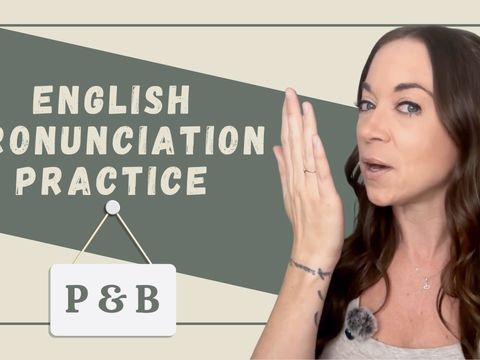 P vs B | 4 minute English Pronunciation PracticePractice videoAll videos
  Work with AshleyBook your first lesson50 minutes, one-on-one, $25. Live calendar in your timezone.Book now
By Ashley Curry · 9 min read · Updated September 16, 2026
Work with AshleyBook your first lesson50 minutes, one-on-one, $25. Live calendar in your timezone.Book now
By Ashley Curry · 9 min read · Updated September 16, 2026
Is accent reduction worth it? Yes, if people ask you to repeat yourself, and no, if your goal is to sound like you were born in Ohio. The first goal takes 10 to 20 lessons. The second is not a realistic target for most adults, and it is not necessary either.
Accent reduction is worth it when your accent costs you something concrete: repeated questions on calls, lost credibility in meetings, weaker interview performance, or the quiet habit of saying less than you know. In 10 to 20 lessons with daily practice, most adults at B1 and above become clearly understood the first time they speak, and that change is permanent. What does not change is your identity as a non-native speaker. You will still have an accent. The research on intelligibility (Munro and Derwing) is clear that being understood and sounding native are separate things, and only the first one affects your life.
I dislike the phrase "accent reduction", even though I use it because it is what people search for. Nobody reduces an accent. You replace specific habits from your first language with the habits of American English, one sound or rhythm at a time. Your accent is part of how you sound, in the same way your voice is, and my students who succeed never lose it. They stop being misunderstood.
I learned German to a B1 level while living abroad, and I know what it feels like to say a sentence correctly and watch someone's face go blank. That blank face was never about my accent as a whole. It was about one vowel, or one stressed syllable in the wrong place. Fix those, and the conversation flows, accent and all.
So when a new student says "I want to sound American", my first question is "What happens now that you want to stop?" The answers are always specific: "My manager says I mumble on Zoom." "The pharmacist could not understand my address." "I was asked twice what company I work for." Those are fixable in weeks. Sounding native is a different project, and it is the wrong one to pay for.
After more than 1,500 online lessons with adults, I can tell you what reliably moves and roughly when. This assumes two lessons a week and 15 to 20 minutes of practice on the other days.
| Lessons | What changes | What you notice |
|---|---|---|
| 1 to 3 | You hear your own errors for the first time. Two or three high-impact fixes: often the flap T in water, final consonants in worked and and, or the vowel in can't | You catch yourself mid-word. Close friends say "something is different" |
| 4 to 10 | Word stress on your work vocabulary, TH in think and this, the American R in work and first | Fewer "sorry, what?" moments on calls. You stop avoiding certain words |
| 10 to 20 | Rhythm: reducing unstressed syllables with the schwa, linking words, contractions in fast speech | You sound relaxed instead of careful. People stop slowing down for you |
| 20 to 40 | Intonation, sarcasm and politeness patterns, sounding natural in small talk | Native speakers forget to adjust for you. Meetings feel like they do in your first language |
The biggest single change happens between lessons 1 and 10, and it comes from hearing. You cannot hear your own accent; your brain plays back what you meant to say. That is why the first thing I do is record you, play it back and point at the exact syllable. Students are often surprised, sometimes a little embarrassed, and then they cannot stop noticing it. That noticing is what makes self-practice work afterwards.
Honesty here saves you money. Three things stay, even after 40 lessons.
What matters is that none of these three affects whether people understand you. The research on intelligibility (Munro and Derwing) separates three things: intelligibility (can people decode your words), comprehensibility (how much effort it takes them) and accentedness (how different you sound from a native). You can score high on accentedness and perfectly on intelligibility at the same time. That is the target. If a coach promises to make you sound native, walk away. If a coach promises that you will stop being asked to repeat yourself, that is a promise a good coach can keep.
Not everyone needs this, and I tell people so in the first lesson. The students who get the clearest return fall into four groups.
Who benefits least: people who mainly write, people who speak English only with other non-native speakers who share their first language, and anyone who is already understood the first time and simply wishes they sounded different. For that last group, I would rather be honest than take the money.
Most people calculate the cost of coaching and never calculate the cost of the problem. The expensive part of an unclear accent is not the repeated question. It is what you do to avoid the repeated question.
You say less in meetings. You let a colleague present the work you did. You type in the chat instead of unmuting. You choose the simpler word instead of the precise one. Students like Julia tell me clear pronunciation was the turning point, and what they mean is not that they suddenly sounded different. They mean they started talking. That is the return, and it is worth more than a few hundred dollars. For the actual prices, from marketplaces to corporate programs, see how much accent reduction coaching costs.
Do not trust your feelings about your accent, in either direction. Measure it. This is the test I give students in week one and again around lesson ten.
If none of those numbers moves after ten lessons, either the coaching is wrong for you or the practice is not happening. Either way, stop and change something. I go through the realistic timeline month by month in how long it takes to reduce an accent.
You can learn a lot about American pronunciation for free, including from my own videos. Where self-study stops working is feedback. Apps and speech recognition accept "close enough". Your own ear accepts your own version of a sound because it has heard it for decades. A coach does two things you cannot do for yourself: hears the error accurately and tells you, in physical terms, what to change. "Your tongue is behind your teeth for TH; put the tip between them and let air pass, like a soft blow." That sentence saves weeks of guessing.
The right target, by the way, is a neutral, general American sound, not a regional one and not a caricature. I explain what that means and whether it suits you in what a neutral American accent is.
Record the 60-second sample today, before you change anything. Then keep the interruption count for five working days. If the number is zero or one, congratulations, you probably do not need accent work, and you can spend the money on something else. If it is five or more, you have your answer to "is accent reduction worth it", and your first lesson should be a diagnosis, not a chat. You can book a first lesson with me for $25; bring the recording and I will tell you exactly which three things to fix first. Everything else I teach is described on my about page.
Often it is worth it most for advanced speakers. Your grammar and vocabulary are already there, so pronunciation is the only thing standing between how competent you are and how competent you sound. Advanced students also progress fastest, because they can apply corrections in real sentences immediately.
No, and you do not need to. Adults keep a trace of their first language. The goal is to be understood the first time, with no effort from the listener. That is fully achievable, and it is the only part that affects your work and your confidence.
Close friends and colleagues usually notice after three to five lessons, because the first fixes are the most audible ones. Strangers stop asking you to repeat yourself somewhere between lessons 8 and 15, assuming you practice 15 to 20 minutes a day between lessons.
No. Speech therapy treats disorders such as a lisp or speech after an injury. An accent is not a disorder; it is your first language's sound system showing through. A pronunciation tutor who is a native speaker of your target accent is the right specialist, and much cheaper than a clinician.
You can improve, especially with shadowing and recording yourself. What you cannot get alone is accurate feedback on the errors you do not hear. The best results I see come from free daily practice combined with a coach for diagnosis and correction.
Marketplaces are the best place to find a tutor and often the worst place to keep one. A tutor who has worked both ways explains the trade-offs.
Twelve questions that reveal in one message whether a tutor has a method, with the good answer, the red-flag answer and how I answer each one.
The five blocks of a 50-minute pronunciation lesson, with minutes, drills and what you take home, plus how the first diagnostic lesson differs.
Private American English coaching with Ashley Curry: pronunciation, accent and confidence, built around your goals.