


English Immersion at Home: A Realistic Daily Plan for Busy Adults
Immersion abroad works because it forces you to speak, not because the air is English. Here is how to recreate that pressure at home in 45 minutes a day.
 How to Choose an Online English Tutor (A Checklist From a Tutor)10 min read
 How Much Does Accent Reduction Coaching Cost in 2026?9 min read
 Is Accent Reduction Worth It? What Actually Changes (and What Doesn't)9 min readAll articles
 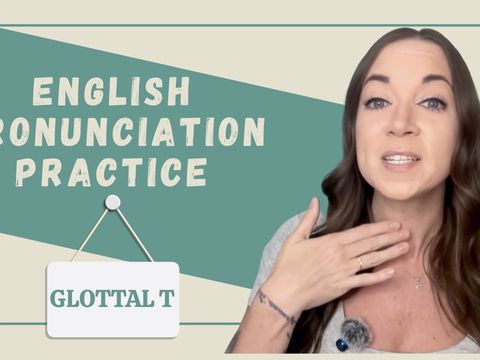 Glottal T | 5 Minute American English Pronunciation PracticePractice video
 Flap T | 2 Minute American English Pronunciation PracticePractice video
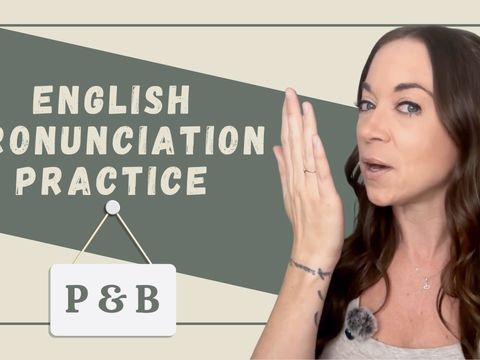 P vs B | 4 minute English Pronunciation PracticePractice videoAll videos
  Work with AshleyBook your first lesson50 minutes, one-on-one, $25. Live calendar in your timezone.Book now
By Ashley Curry · 10 min read · Updated August 12, 2026
Work with AshleyBook your first lesson50 minutes, one-on-one, $25. Live calendar in your timezone.Book now
By Ashley Curry · 10 min read · Updated August 12, 2026
If a colleague has ever answered "Great!" when you said you can't make the deadline, this article is for you. In American English the T in can't is nearly silent, and the meaning lives somewhere else entirely.
Americans tell can and can't apart by the vowel and the stress, not by the T. In a normal sentence, can is unstressed and shrinks to kn or kən, a tiny sound that rushes past: "I kn DO it." Can't is always stressed, keeps its full open æ vowel, is held longer, and ends with a sudden stop: "I KÆN(t) do it." If you pronounce can with a full, clear vowel, an American hears can't. If you make can't short and rely on the T, an American hears can. Fix the vowel and the stress, and the T stops mattering.
Most pronunciation mistakes cost you a little clarity. This one reverses your meaning. Picture the call: you say "I can't have it ready by Friday," the manager says "Perfect," and the problem only surfaces on Friday. Nobody in that meeting heard a missing T. They heard a short, quick word and their brains filled in can. Versions of this story come up in my lessons more than any other single misunderstanding.
Here is the mechanism. Learners are taught that can't is can plus a T, so they say can as a full clear word and then try to add a T at the end. Two problems follow. First, American speakers rarely release a final T before a consonant, so can't do gives the listener almost no T to detect. Second, and worse, a full clear can is exactly what can't sounds like to an American ear, because in natural speech can is never full and clear. So the learner's positive sentence sounds negative and their negative sentence sounds positive. Both directions fail.
This is why students at B2 and C1 who have excellent grammar still get misunderstood on this one word. It is not a knowledge gap. It is a habit that no amount of reading fixes, because the difference is something you have to hear and then feel in your mouth.
Can is a function word. Like to, and, of and for, it carries grammar rather than meaning, so American English squeezes it. The vowel drops to the schwa, and often disappears entirely, leaving just kn.
| Written | Spoken | Beats |
|---|---|---|
| I can do it. | I kn DO it | Stress on DO |
| You can call me. | You kn CALL me | Stress on CALL |
| She can speak French. | She kn speak FRENCH | Stress on FRENCH |
| We can meet at ten. | We kn MEET at TEN | Stress on MEET and TEN |
| Can you help? | Kn you HELP? | Stress on HELP |
Notice that the stress always jumps to the main verb. Can is never the loud word in a positive sentence. If you put your hand on the table and tap once for each stressed syllable, I can do it gets one tap, on do. Most learners tap twice, on can and do, and that second tap is what turns their sentence negative.
The reduced can is so short that it often links straight onto the next word. I can ask becomes I kn-ask, one smooth run. This is a piece of connected speech that Americans do without noticing.
Can't is different in every measurable way. It is always stressed. The vowel is the wide open æ of bad and cat, and it is held noticeably longer than the vowel in any nearby word. Then the sound stops suddenly, as if it hit a wall. That wall is the T, but it is a glottal stop or an unreleased T rather than a puff of air. The tongue goes up, the air stops, and the next word begins. I cover this stop in detail in my article on the glottal T.
| Written | Spoken | Beats |
|---|---|---|
| I can't do it. | I KÆN(t) do it | Stress on CAN'T, then DO |
| You can't call me. | You KÆN(t) call me | Stress on CAN'T |
| She can't speak French. | She KÆN(t) speak French | Stress on CAN'T |
| We can't meet at ten. | We KÆN(t) meet at ten | Stress on CAN'T |
Put the two side by side and say them out loud: I kn DO it and I KÆN do it. The first has one beat and a rushed little sound before it. The second has a big beat at the front, with a long vowel and a hard stop. Nobody needs the T. Americans identify can't from the length and loudness of the æ before the T ever arrives.
One vowel warning. If your æ is closed and sounds like the ɛ in bed, can't comes out as Kent, which is a place and a name but not a negative. The open jaw is part of the signal. I go through how to open it in my guide to English vowel pairs, under bad and bed.
The rule "can is unstressed" has three exceptions, and they are logical once you see them.
1. At the end of a sentence. "Can you swim?" "Yes, I can." Here can has nothing after it to carry the stress, so it takes the full kæn vowel. Because there is no following word, there is no confusion: can't in the same spot would show its stop clearly. "No, I can't."
2. For contrast or emphasis. "You said I couldn't, but I CAN." Full vowel, heavy stress, and the meaning is unmistakable because the sentence is built around the contrast.
3. In a short question with nothing else to stress. "Can I?" "Can we?" Both words get some weight because there are only two of them.
Outside these three cases, a stressed can in a normal statement is heard as can't, or at best as confusing. When a student's English sounds "negative" or "unsure" to their American colleagues, this is often the cause: every can is coming out with the weight of a can't.
Even native speakers occasionally miss this, especially on a bad phone line, and it helps to know what they do about it. They ask "Can or can't?" and the answer is never a repeated sentence. It is one of two moves.
Copy this. If a meeting matters and the line is poor, say cannot instead of can't. It costs nothing and removes every doubt. My article on English for meetings and calls has a longer list of these safety phrases, but cannot is the one I hear my students use most after we cover it.
You need to train two things separately: the reduction of can, and the length and stress of can't. Then you need to mix them until your mouth chooses correctly without thinking. Here is the routine I give students, with a phone recorder open.
Minutes 1 to 3: reduce "can." Say these five sentences, tapping once on the stressed verb and letting can almost vanish: I can help. You can start. We can try. They can wait. She can come. If you hear a clear A in can on playback, do that sentence again with your finger held up until the verb, then drop it.
Minutes 4 to 6: stretch "can't." Same five sentences, negative: I can't help. You can't start. We can't try. They can't wait. She can't come. Hold the æ for a count of two in your head, drop the jaw, and stop the sound hard with your tongue. Do not push air out for the T. On playback, can't should be the loudest and longest syllable in the sentence.
Minutes 7 to 10: mix them. Write the ten sentences on ten slips of paper, shuffle, and read them in random order. Record. Then play it back the next day, when you have forgotten the order, and mark each one as can or can't from the sound alone. Anything you cannot classify from your own recording, an American cannot classify either.
The last step is the one students cannot do well alone at first, because you know what you meant, and your brain hears what you meant. In lessons I play a student's sentence without the context and ask "can or can't?" and watch them hesitate over their own voice. That hesitation is the diagnosis. After a few sessions they stop hesitating, and so do their colleagues.
Once the ten short sentences are clean, move to the kind of sentence you will actually say at work. Read each pair aloud, positive then negative, and keep the difference in the vowel and the stress.
Say the positive sentences fast and light, one strong beat on the verb. Say the negative ones with a clear pause before can't, a long open vowel, and a stop. If you record the list and a friend, a colleague or your tutor can label every sentence correctly with the sound off for the rest of the sentence, the habit is built.
Run the ten-minute drill every day for seven days. On day one, record the six office pairs before you start and keep the file. On day seven, record them again and listen to both. You are listening for two things: a can that has become small and quick, and a can't that has become long, loud and open. Also, once a day, catch yourself saying can in a real conversation and notice whether the stress went to the verb. That single moment of noticing, repeated daily, is what moves a drill into a habit.
If you would like me to play your sentences back to you and tell you honestly which ones an American would mishear, book a first lesson. It is 50 minutes for $25, and can versus can't is one of the first things I test, because it is the mistake with the highest cost. Ongoing lessons and packages are listed on the pricing section.
Yes. In American English the final T of can't is usually unreleased or replaced by a glottal stop, so listeners barely hear it. They identify can't by its long, stressed, open vowel and can by its short, unstressed, reduced vowel. If you get the vowel and stress right, the T takes care of itself.
Because you are pronouncing can with a full, clear vowel and some stress, and that is exactly what can't sounds like in natural American speech. In a positive sentence, can should be reduced almost to "kn" with the stress on the following verb.
In high-stakes moments or on a bad phone line, yes. "Cannot" with stress on "not" is impossible to mishear and sounds perfectly natural. In everyday conversation, though, learn the can't pattern, because you will hear it constantly and native speakers expect it.
Yes. British speakers say can't with a long back vowel, like "kahnt," which is very different from can. American can't uses the same open vowel as can, which is why the stress and length carry the difference. If you learned British English, you may need to adjust your can't vowel to be understood as American.
Before a vowel, Americans often turn the T into a nasal flap or a quick stop, so "can't eat" sounds like "can-eat" with a tiny catch, not "cant-teat." The long stressed vowel still carries the meaning. Do not add a hard, released T; it sounds unnatural.
Immersion abroad works because it forces you to speak, not because the air is English. Here is how to recreate that pressure at home in 45 minutes a day.
From a former recruiter: the 15 words to pronounce perfectly, STAR answers in 90 seconds, ten ready phrases, and a two-week mock-interview plan.
A tutor's preparation plan for presenting in English: script the first minute, rehearse the numbers, stress the key words, and practice out loud with feedback.
Private American English coaching with Ashley Curry: pronunciation, accent and confidence, built around your goals.