
How to Remember English Vocabulary (And Actually Use It When Speaking)
You recognize thousands of English words and speak with a few hundred. A ten-words-a-week system that puts vocabulary in your mouth, not just your memory.
 How to Choose an Online English Tutor (A Checklist From a Tutor)10 min read
 How Much Does Accent Reduction Coaching Cost in 2026?9 min read
 Is Accent Reduction Worth It? What Actually Changes (and What Doesn't)9 min readAll articles
 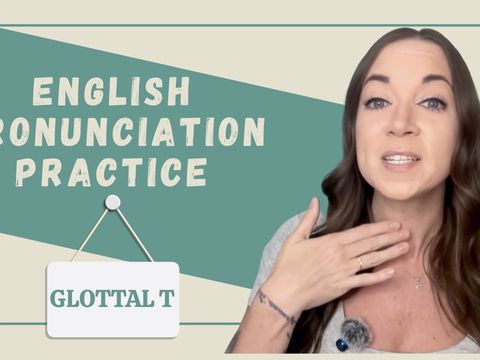 Glottal T | 5 Minute American English Pronunciation PracticePractice video
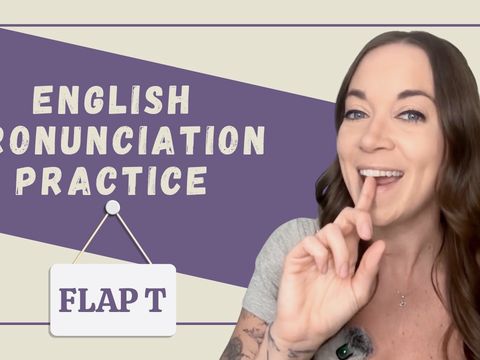 Flap T | 2 Minute American English Pronunciation PracticePractice video
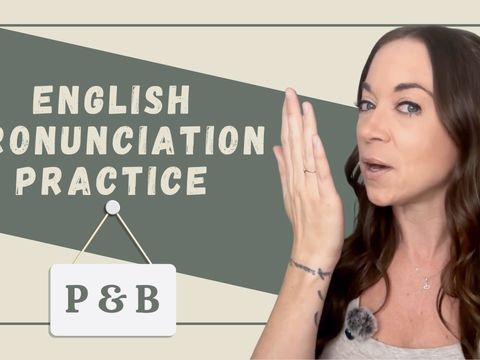 P vs B | 4 minute English Pronunciation PracticePractice videoAll videos
  Work with AshleyBook your first lesson50 minutes, one-on-one, $25. Live calendar in your timezone.Book now
By Ashley Curry · 10 min read · Updated August 13, 2026
Work with AshleyBook your first lesson50 minutes, one-on-one, $25. Live calendar in your timezone.Book now
By Ashley Curry · 10 min read · Updated August 13, 2026
Most misunderstandings in English come from vowels, not consonants, and most of those come from five pairs. Learn what your mouth does differently in each pair and sheet, beach and can't stop being risky words.
English vowel pairs cause trouble because many languages have one vowel where English has two. The pairs that matter most are ship/sheep (ɪ vs iː), bad/bed (æ vs ɛ), full/fool (ʊ vs uː), cup/cop (ʌ vs ɑ) and taught/thought, which in most of the US are the same vowel as cot. The difference is not just length. It is jaw height, tongue position and lip shape, and each pair has one physical change you can feel. Ten minutes a day of minimal-pair listening, then speaking, then recording, fixes most pairs within a few weeks.
Spanish has five vowels. Japanese has five. Arabic has three short and three long. American English has about fifteen, depending on how you count, and it squeezes them into the same mouth space. So when a Spanish speaker says sheet, the vowel lands halfway between the English ɪ of ship and the iː of sheep, and the American listener has to guess. With sheet and beach, the wrong guess is a word you did not want to say in a meeting.
This has nothing to do with effort or intelligence. Your brain learned the vowel categories of your first language as a toddler, and it files every new vowel into the closest existing box. When two English vowels fall into one box, you literally do not hear the difference. This is the part students cannot fix by listening harder, and it is why the first thing I do in a lesson on vowels is not a drill. It is a listening test, so we both find out which pairs your ear currently merges.
The good news is that vowels are physical. Each pair has a difference in jaw, tongue or lips that you can feel, see in a mirror and repeat.
Every textbook calls iː the "long" vowel and ɪ the "short" one, and that description causes the mistake. Students stretch ship into shiiip and it still sounds like ship, or they cut sheep short and it still sounds like sheep. Length is a side effect. The real difference is muscle tension.
For sheep, smile hard. The corners of your mouth pull back, the tongue pushes up and forward toward the roof of your mouth, and the whole face is tight. For ship, let everything go. The tongue drops a little and moves back, the lips are neutral, the jaw is relaxed. The vowel in ship is closer to the vowel in bet than most learners expect.
ɪ relaxed | iː tense |
|---|---|
| ship | sheep |
| sit | seat |
| bit | beat |
| fill | feel |
| live | leave |
| hit | heat |
| slip | sleep |
| itch | each |
The self-check: put your fingers on your cheeks and say sheep, ship, sheep, ship. You should feel the cheek muscles tighten and release. If nothing changes, both words are coming out the same. Sentence for practice: Please sit in this seat, then I feel I need to fill it.
The æ vowel in bad, cat, man and can't does not exist in most languages, so learners replace it with the ɛ of bed. The result is that bad sounds like bed, man sounds like men, and had sounds like head.
The fix is jaw height. For bed, the jaw is half open and the mouth is fairly neutral. For bad, the jaw drops noticeably further and the mouth widens sideways at the same time, like the start of a yawn combined with a smile. American speakers open more for this vowel than British speakers do, and much more than most learners expect. Students tell me it feels exaggerated. On the recording, it sounds normal.
This vowel also carries the most important distinction in American business English, the one between can and can't. Can't has this open æ and holds it; unstressed can shrinks to almost nothing. I explain the whole pattern in my article on can vs can't in American English. If your æ is closed and short, that whole distinction disappears from your speech.
This pair is the back-of-the-mouth twin of ship/sheep, and the same tension rule applies. Fool, pool, Luke and food have the tense uː: lips pushed forward into a tight round shape, tongue high and back. Full, pull, look and foot have the relaxed ʊ: lips only slightly rounded, tongue lower, everything loose.
The mistake almost always goes one way. Learners make every one of these words tense, so look becomes Luke and pull becomes pool. The spelling does not help, because oo can be either: food is tense, good is relaxed, flood is a different vowel entirely.
ʊ relaxed | uː tense |
|---|---|
| full | fool |
| pull | pool |
| look | Luke |
| could | cooed |
| soot | suit |
| should | shoed |
The self-check here is the mirror. Say fool and your lips should form a small tight circle you could push a straw through. Say full and the circle relaxes and widens. If both words show the same lip shape, you are making one vowel.
Many learners collapse cup, cop and cap into one middle sound, and the result is luck sounding like lock, hut like hot, and color like collar.
Cup has ʌ, the vowel closest to a relaxed grunt. Jaw half open, tongue in the middle of the mouth, no lip rounding at all, very short. It is almost a stressed version of the schwa. Cop has ɑ, the sound the doctor asks for: jaw fully dropped, tongue low and back, held longer. Cap has the æ from the previous section, jaw dropped but mouth spread wide.
This one confuses students for a good reason. British English separates cot (ɒ) from caught (ɔː), and older American pronunciation guides keep taught and thought with a rounded ɔ. But most Americans today, including me, say cot and caught with the same vowel: the open ɑ from cop. Taught, thought, bought, law, saw, coffee and dog all share it, or come very close.
So the difference between taught and thought is not the vowel at all. It is the first consonant: a T against the voiceless TH. Students who spend weeks trying to hear a vowel difference between these two words are chasing something that does not exist in a neutral American accent.
The practical lesson is to stop trying to round the lips for -aught and -ought words. Say them with the dropped-jaw cop vowel and you will sound like most of the country. If you learned British English first and keep the rounded vowel, Americans will understand you; you will simply sound slightly British on those words. Consistency matters more than which one you choose, as I explain in American vs British pronunciation.
Minimal pairs are two words that differ by one sound, and they are the most efficient vowel tool I know. But most students use them wrong: they read the list once, say each pair a few times, and move on. Here is the version that works, ten minutes for one pair per day.
Step three is where students get stuck alone, because listening to yourself objectively is hard. In lessons I play back a student's recording and ask them to label each word before I tell them what I heard. Once a student hears their own sheet land on the wrong side, they never forget it.
One more thing that helps: vowels change with word stress. An unstressed syllable loses its full vowel, so you only need to get the pair right in stressed syllables, which is a smaller job.
You do not have five problems. You have one or two. This is what I see most often, so you can guess where to start before a diagnostic tells you for certain.
| First language | Usual first target | Usual second target |
|---|---|---|
| Spanish, Italian, Portuguese | ship / sheep | bad / bed |
| French | ship / sheep | full / fool |
| German, Dutch | bad / bed | cup / cop |
| Russian, Polish, Ukrainian | ship / sheep | bad / bed |
| Japanese, Korean | full / fool | bad / bed |
| Mandarin, Cantonese | ship / sheep | bad / bed |
| Arabic | ship / sheep | cup / cop |
| Hindi, Urdu, Bengali | bad / bed | full / fool |
These are tendencies from my lessons, not rules, which is why a diagnostic recording comes before any drilling.
Pick one pair from the table above. Do the ten-minute routine every day for seven days on that pair only. On day one and day seven, record the same three sentences: Please sit in this seat, The man said it was bad, and Look at the pool. Compare the two recordings. If you can hear the change, move to your second pair next week. If you cannot, the pair needs a second week or a second pair of ears.
If you want a diagnostic that tells you exactly which vowels your ear merges, book a first lesson: 50 minutes, $25, and you leave with a short list of your actual problem pairs instead of a guess. More about how I teach is on my page.
Ship/sheep and bad/bed cause the most misunderstandings across almost every first language, followed by full/fool and cup/cop. Taught/thought is not a vowel pair in most American speech; the two words differ only in their first consonant.
Not mainly. The vowel in sheep is tense, with the lips spread and the tongue high and forward; the vowel in ship is relaxed. Sheep is also a little longer, but making ship longer does not turn it into sheep. Change the tension and the length follows.
In a neutral American accent, no. Most Americans say taught, thought, cot and caught with the same open vowel as in cop. A rounded vowel is not wrong, but it will sound British or East Coast. Pick one and stay consistent.
With ten minutes of daily minimal-pair practice and feedback on recordings, most students hear the pair reliably within one to two weeks and produce it in conversation within a month or two. Without feedback it takes longer, because you cannot check your own vowels while speaking.
Because in conversation your attention is on meaning, and your mouth falls back on the old habit. The bridge is sentence practice: put both words of a pair into one sentence and say it at normal speed until the new vowel survives. Then use the word deliberately in your next meeting.
You recognize thousands of English words and speak with a few hundred. A ten-words-a-week system that puts vocabulary in your mouth, not just your memory.
Immersion abroad works because it forces you to speak, not because the air is English. Here is how to recreate that pressure at home in 45 minutes a day.
From a former recruiter: the 15 words to pronounce perfectly, STAR answers in 90 seconds, ten ready phrases, and a two-week mock-interview plan.
Private American English coaching with Ashley Curry: pronunciation, accent and confidence, built around your goals.