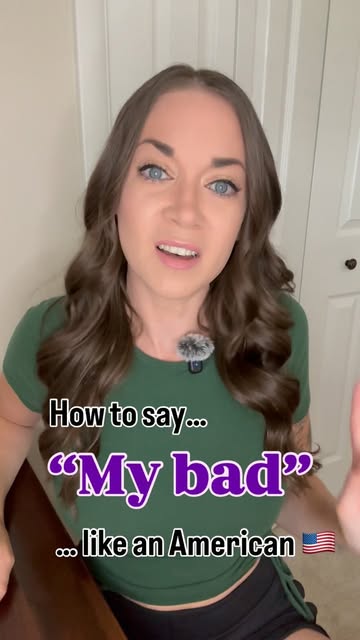

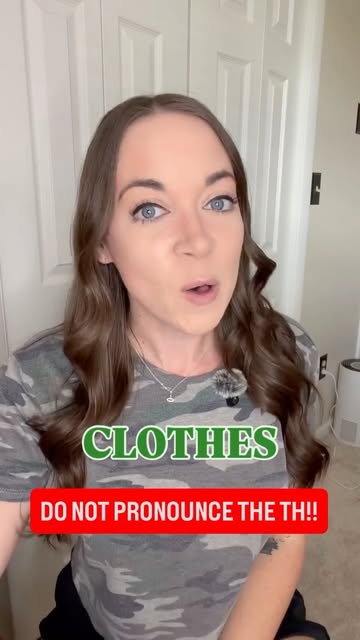
How to Pronounce TH in English (Both Sounds, Every Position)
Two TH sounds, one spelling. Tongue position, the substitute your first language uses, the end-of-word trap, and a ten-minute daily routine.
 How to Choose an Online English Tutor (A Checklist From a Tutor)10 min read
 How Much Does Accent Reduction Coaching Cost in 2026?9 min read
 Is Accent Reduction Worth It? What Actually Changes (and What Doesn't)9 min readAll articles
  Glottal T | 5 Minute American English Pronunciation PracticePractice video
 Flap T | 2 Minute American English Pronunciation PracticePractice video
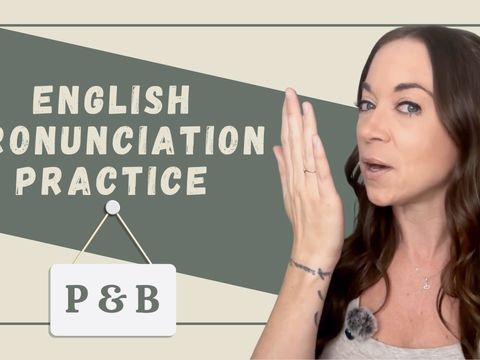 P vs B | 4 minute English Pronunciation PracticePractice videoAll videos
  Work with AshleyBook your first lesson50 minutes, one-on-one, $25. Live calendar in your timezone.Book now
By Ashley Curry · 10 min read · Updated August 27, 2026
Work with AshleyBook your first lesson50 minutes, one-on-one, $25. Live calendar in your timezone.Book now
By Ashley Curry · 10 min read · Updated August 27, 2026
You do not have a memory problem. You have a retrieval problem: the words are in there, but when you are speaking and need negotiate, your brain serves talk about, because it is faster to reach. Fixing that is the real answer to how to remember English vocabulary, and it has almost nothing to do with flashcards of single words.
Learn ten words a week, never more, and learn each one as a phrase you would actually say, not as a definition. Say the phrase out loud before you save it, with the correct stressed syllable, because a word you cannot pronounce confidently is a word you will avoid. Review with spaced repetition, but make the card a sentence with a gap, not a translation. Then force each word into your mouth at least three times in real speech that week: a voice note, a lesson, a meeting. Recognition happens from reading. Use happens only from speaking.
Every B2 student I teach has a large passive vocabulary. They read articles, they understand series without subtitles, and they know exactly what reluctant, overwhelming and a rough estimate mean. Then I ask them to describe a difficult week at work, and I hear very busy, a lot of problems, and I did not want to. The words are known. They are not available.
This is the gap between recognition and production, and it is the main reason people stay at upper-intermediate for years. Recognition needs only a weak link: you see the word, context helps, meaning arrives. Production needs a strong link in the opposite direction: you have a meaning, under time pressure, and the word has to arrive without help. Reading builds the first link thousands of times. It builds the second link zero times.
So the question is not "how do I memorize more words." Most students already have enough. The question is how to move a few hundred words from the recognition pile to the production pile, and that requires a different kind of practice. If this sounds like your situation, breaking the intermediate plateau covers the other habits that keep people there.
Single words are stored badly and retrieved slowly. Phrases are stored as one unit and come out as one unit. When a native speaker says "make a decision", they are not choosing make from a list of verbs. The whole chunk arrives together. When a learner who memorized decision alone tries to use it, they stall on the verb, guess take or do, and lose confidence in the word.
| What students save | What they should save | Why |
|---|---|---|
| deadline = fecha límite | We're up against a tight deadline. | Gives you the verb, the adjective and the preposition in one move. |
| issue = problem | I'll raise the issue with the team. | Teaches the collocation raise an issue, which you cannot guess. |
| reluctant = unwilling | I was reluctant to say yes at first. | Locks in reluctant to + verb, which is the only way it is used. |
| leverage = use | We can leverage what we already have. | Shows register: meeting English, not dinner English. |
| rough = approximate | Just give me a rough estimate. | Single word has five meanings; the phrase has one. |
The rule I give students is simple: if the phrase is not something you can imagine yourself saying next week, do not save it. "The committee deliberated at length" is a real English sentence and useless to a software developer. "Let me think about it and get back to you" is the sentence they will need on Thursday.
The fastest way to get good phrases is to ask a native speaker, or a tool, for six sentences a person in your job would say with the word. I show the exact prompts in using ChatGPT to learn English. Then pick the two you would really say and throw away the rest.
This is the step almost everyone skips, and it explains a pattern I see constantly. A student knows a word perfectly on paper and never uses it in speech, and when I ask why, the honest answer is "I'm not sure how to say it." Comfortable, vegetable, colleague, hierarchy, entrepreneur, thorough: all understood, all avoided.
Your brain quietly picks a safer word whenever saying the right one carries a risk of sounding wrong, so your speaking vocabulary shrinks to the words you are sure you can pronounce. That is why my rule is pronunciation-first: before a word goes into your system, you say it aloud three times, with the stress in the right place, and you check it against a dictionary recording.
Stress is the part that matters most, because it is what an American ear uses to identify the word. Colleague is COL-league, two syllables, not "col-LEAGUE". Comfortable is "KUMF-ter-bul", three syllables. Develop is de-VEL-op. Get the stress right and a slightly off vowel is forgiven. Get the stress wrong and a perfect vowel will not save you. The word stress rule gives you the patterns.
In lessons, I do this out loud with every new word a student brings. Half the time the pronunciation in their head is wrong in a way they cannot hear, and we fix it in thirty seconds, which often turns a word avoided for years into one used the same week. My short videos on business, economy, especially and essentially exist for the same reason; Business English words you are probably mispronouncing collects them.
Spaced repetition works. The principle is solid: review a word just before you would forget it, and each successful recall pushes the next review further out. Apps like Anki automate the schedule. The problem is not the schedule. It is what people put on the cards.
A card that says reluctant on the front and a translation on the back trains exactly one skill: recognizing reluctant when you read it. That is the skill you already have. To train production, the card has to run in the production direction and it has to force you to speak.
| Card type | Front | Back | Trains |
|---|---|---|---|
| Typical (weak) | reluctant | unwilling, hesitant | Recognition only |
| Gap sentence | I was ____ to say yes at first. (hesitant) | reluctant, with audio | Retrieval from meaning |
| Situation | Your manager asks you to work Saturday. You do not want to. Say it politely. | "Honestly, I'm a bit reluctant to give up my weekend." | Production under a real prompt |
Two more rules. First, say every answer out loud, not in your head. Silent review builds silent vocabulary. Second, cap your daily reviews. Twenty cards a day, spoken, beats a hundred cards flipped in silence on the train. If your review pile grows to the point where you skip days, delete half of it. The goal is ten words a week that you actually use, not a database.
Ten is not a random number. It is what my students can carry into real speech in a week while also living their lives. Here is the shape of the week.
| Day | Task | Time |
|---|---|---|
| Monday | Collect ten phrases from your real week: a meeting, an article, a series, a lesson. Say each aloud three times, check stress with a dictionary recording. Make gap-sentence cards. | 20 min |
| Tuesday | Review cards aloud. Record a two-minute voice note about your day that uses at least four of the ten. | 10 min |
| Wednesday | Review aloud. Use three of the phrases in a lesson or a real conversation. Notice which ones felt awkward. | 10 min + lesson |
| Thursday | Review aloud. Write five sentences about tomorrow's work using the awkward ones. Read them aloud twice. | 10 min |
| Friday | Record a two-minute voice note summarizing your week. Target: all ten phrases, without looking. | 10 min |
| Weekend | Listen to Tuesday's and Friday's notes back to back. Words that came out easily on Friday are done. Words that did not go into next week's ten. | 10 min |
Most weeks, six or seven of the ten will stick. Three or four roll over. That is the system working, not failing. After ten weeks you have around sixty phrases that come out of your mouth without a search, and sixty productive phrases changes how you sound far more than six hundred recognized words.
The step that makes this whole system work is deliberate retrieval in real speech, and it feels uncomfortable at first. You are choosing the harder word on purpose, in the moment, when the easy word is right there. That discomfort is the sign that the production link is being built.
In my lessons I run a version of this that students first hate and then ask for. At the start we agree on three target phrases from their week. During the conversation part of the lesson, my job is to steer toward moments where those phrases fit, and their job is to use each one at least twice. If they use a lot of problems when a few issues came up was the target, I stop them and we redo the sentence. By the end of 50 minutes the phrase has been retrieved under mild pressure five or six times. That is more productive repetitions than most learners get in a month of reading.
You can build a solo version. Before a voice note, write your three target phrases on a sticky note and keep talking until you have used each one. Before a meeting, pick one phrase you will say in the first ten minutes. Narrate a task while you do it and force the word in. More ways to do this without an audience are in how to practice English speaking alone.
What you cannot do alone is know whether the phrase came out right. A word retrieved with the wrong stress or preposition gets reinforced wrong, and undoing that later is slow. A weekly lesson is for catching those while they are still soft. Students like Ana and Olivia tell me the words we drilled together are the ones that now come out first, without thinking.
Collect ten phrases today from things you actually said or read, not from a list. Say each one aloud three times, check the stressed syllable against a dictionary recording, and make a gap-sentence card for each. Record a two-minute voice note on Tuesday and Friday, and try to use all ten by Friday without looking. Then listen to both notes. If four or more came out naturally, keep the system and add ten new ones next Monday. If you are not sure whether you pronounced them correctly, book a first lesson for $25, bring the ten phrases and the Friday recording, and we will fix the ones that are off before they set. You can read more about how I teach on my page.
Learn words as short phrases you would actually say, say them aloud with the correct stress before saving them, review them with gap-sentence cards you answer out loud, and use each one in real speech at least three times in the first week. Retrieval in speech is what makes a word permanent.
Ten phrases a week is the number my students can actually move into speaking while working full time. Thirty leads to thirty recognized and none used. If you consistently get all ten into your voice notes and conversations, go to fifteen.
Yes, if the cards force production: a sentence with a gap, or a situation you must respond to, answered out loud. A word-and-translation card only trains recognition, which you already have. The app is a schedule; the card design is what decides whether it works.
Because you built the link from word to meaning by reading, but speaking needs the link from meaning to word under time pressure. That link is only built by retrieving the word while speaking. Voice notes, lessons and deliberate use in meetings build it; reading and silent review do not.
No. A word you cannot pronounce confidently is a word you will avoid without noticing. Check the stress and say every new word aloud before it goes into your system. Correcting a stored mispronunciation later is slower than learning the word correctly once.
Two TH sounds, one spelling. Tongue position, the substitute your first language uses, the end-of-word trap, and a ten-minute daily routine.
The American R touches nothing. Bunched or retroflex, lip rounding, the five R-colored vowels, and a three-week plan for car, work and first.
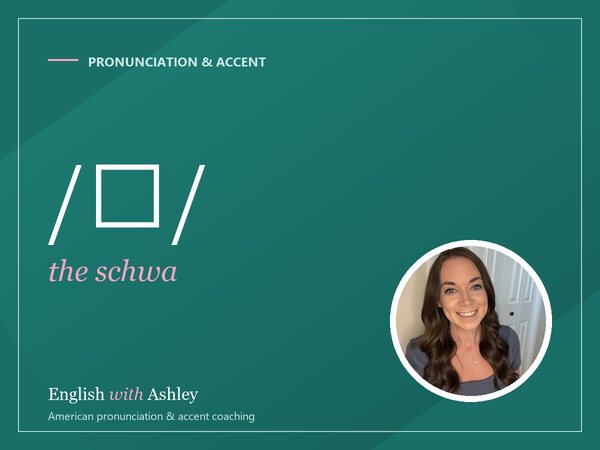
The short, relaxed uh in about, problem and to. Why any vowel letter can be a schwa, how to find it from the stress, and a ten-minute routine.
Private American English coaching with Ashley Curry: pronunciation, accent and confidence, built around your goals.