
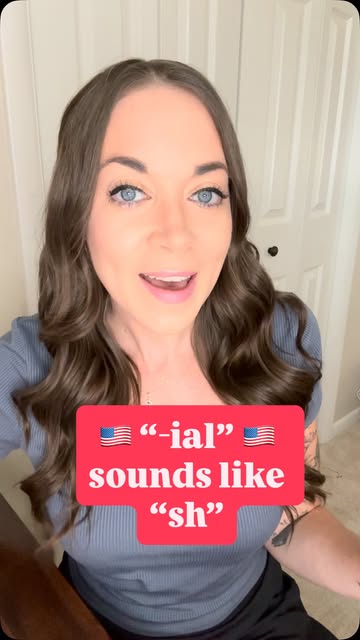
American Slang Explained: My Bad, For Real, No Way, Bless Your Heart
What common American expressions really mean, the tone that changes them from friendly to sarcastic, and when a learner should not use them.
 How to Choose an Online English Tutor (A Checklist From a Tutor)10 min read
 How Much Does Accent Reduction Coaching Cost in 2026?9 min read
 Is Accent Reduction Worth It? What Actually Changes (and What Doesn't)9 min readAll articles
  Glottal T | 5 Minute American English Pronunciation PracticePractice video
 Flap T | 2 Minute American English Pronunciation PracticePractice video
 P vs B | 4 minute English Pronunciation PracticePractice videoAll videos
  Work with AshleyBook your first lesson50 minutes, one-on-one, $25. Live calendar in your timezone.Book now
By Ashley Curry · 10 min read · Updated July 14, 2026
Work with AshleyBook your first lesson50 minutes, one-on-one, $25. Live calendar in your timezone.Book now
By Ashley Curry · 10 min read · Updated July 14, 2026
The students who sound most natural in English are rarely the ones with the best grammar. They are the ones who have picked up nine specific habits of rhythm, reduction and reaction that native speakers use without noticing.
How to sound more natural in English, in nine habits: use contractions every time; reduce unstressed words to a schwa; stress content words and shrink the rest; link words together; speak in memorized chunks rather than word by word; hesitate the way natives do, with um, like and you know instead of silence; move your pitch up and down; react while listening with right, gotcha and makes sense; and speak in shorter sentences with real pauses. Grammar accuracy is not on the list, because listeners judge naturalness by sound and flow long before they notice a missing article.
A student of mine, an engineer with near-perfect grammar, once asked why colleagues switched to short simple sentences whenever they spoke to him. I recorded him for two minutes and played it back. "I am going to send it to you" had eight clear syllables. No contractions, no reductions, no pitch movement, equal stress on every word. His English was correct and it sounded like a text-to-speech engine, so people treated him like one.
Native speakers do not hear grammar first. They hear rhythm, melody and speed of response. The nine habits below are those things, made concrete. None requires new vocabulary, and each is a small mechanical change you can practice in minutes a day.
Natural spoken English is built on contractions. I'm, you're, it's, we've, they'd, she'll, isn't, won't, can't. Native speakers use the full form only for emphasis or contrast: "I am listening" is a protest, not a statement.
The habit to build: never say "I am," "it is," "do not" or "I will" in conversation unless you are making a point. The pronunciation matters too. I'd is a single syllable, ide; I'll is ile; you're is yer; we've is weev. Students often write the contraction and then pronounce both words anyway. If that is you, read why "I am" sounds robotic, which covers how each contraction actually sounds.
The schwa, uh, is the most common vowel in English, and it is the sound of every unstressed syllable and almost every grammar word. To is ta, for is fer, of is uv, can is kn, a and the are barely there. "I need to go to the store for a minute" is I needta go ta the store fer a minute.
Learners resist this because it feels lazy or unclear. It is the opposite. When the small words shrink, the big words stand out, and the listener's ear lands on exactly what matters. Speakers who pronounce every vowel fully are harder to follow, because nothing stands out. My article on the schwa shows you how to find it in any word.
English is stress-timed. Nouns, main verbs, adjectives and adverbs get long, loud, high syllables; pronouns, prepositions, articles and auxiliaries get short, quiet, low ones. "I've been WAITing for an HOUR" has two beats. Say it with six equal syllables and it sounds like a machine.
The test I use with students: tap the table on the stressed words only while you speak. If you find yourself tapping on for or the, you are stressing the wrong words. Within a sentence, this habit does more for naturalness than any individual sound, and within a word it is the difference between de-VEL-op and the unnatural DE-vel-op.
Natives do not pause between words. A word ending in a consonant flows straight into a word starting with a vowel: "turn it off" is tur-ni-toff, "an apple" is a-napple, "pick it up" is pi-ki-dup (with a flap on the T). Two identical consonants merge: "big game" has one G. T or D before Y becomes ch or j: "don't you" is doanchu, "did you" is didja.
Learners who separate every word sound careful and slow, and they also struggle to hear natives, because they are listening for the gaps. The full set of linking rules with drills is in connected speech and linking. The one to start with is consonant-to-vowel linking, because it is the most common and the easiest to feel.
Fluent speakers do not assemble sentences one word at a time. They pull out ready-made pieces: the thing is, at the end of the day, I was wondering if, to be honest, it turns out, as far as I know, that makes sense, I'll get back to you. Each chunk is stored and produced as one unit, with one rhythm, and that is why natives can talk fast without thinking.
The habit: learn phrases, not words. When you meet a useful expression, memorize the whole thing with its stress pattern, and practice saying it as a single burst. Ten well-chosen chunks used daily do more for how natural you sound than a hundred new nouns. Chunks also come out before translation has time to start, which is the fix for the pause-and-translate habit that keeps many B2 speakers sounding hesitant.
Everyone hesitates. Natives fill the gap with sound: um, uh, like, you know, I mean, well, so, let me think. Learners tend to go silent, or worse, they insert the filler from their first language: eeeh, ano, este. Silence sounds like you have finished, so people interrupt you. A foreign filler is the fastest way to sound non-native, faster than any consonant.
The habit: choose two American fillers and use them on purpose for a week. Um and I mean are the safest. Say um with a schwa and a slight fall, uhm, not a long flat ehhh. Also learn to buy time with a phrase: "That's a good question," "Let me think about that for a second," "So, the way I see it." These are chunks, and they let your brain catch up while your mouth sounds fluent.
One warning: like is natural in casual American speech and grating in a presentation. Use it with friends, not with clients.
Flat intonation is the single most common reason a correct sentence sounds cold, bored or rude. American English has a narrower pitch range than British English, but it still moves: statements fall at the end, yes/no questions rise, lists rise-rise-fall, and the important word in a sentence gets a pitch jump. "I didn't say she stole it" changes meaning seven times depending on which word gets the jump.
The habit: exaggerate. Make your rises and falls twice as big as feels comfortable. On recordings, learners who think they are exaggerating usually sound normal, and learners who think they sound normal usually sound flat. The same phrase with different melody can be a compliment or an insult, which I explain with real examples in how "good for you" can be a compliment or an insult.
Natural conversation is not turn-taking in silence. While the other person talks, natives signal that they are following: right, yeah, mm-hm, gotcha, makes sense, oh wow, no way, totally, I see. Linguists call this backchanneling, and Americans do a lot of it. A listener who stays silent reads as confused or disengaged, even when they understood everything.
The habit: every fifteen to twenty seconds, produce a small reaction. On video calls, where nods are hard to see, this matters twice as much. Learn the tone too: gotcha is falling and quick; oh wow rises on wow; right as agreement is short and falling, and right? as a question rises.
Learners often try to sound advanced by building long sentences with three clauses. Natives, in speech, use short sentences and pause between them. "So I talked to the client. They want it by Friday. Which is tight, but doable." Three sentences, three pauses, easy to follow. The long version, "I talked to the client who told me that they want it by Friday, which although it is tight I think is doable," is harder to say, harder to hear and sounds like writing.
The habit: end sentences sooner than feels natural, and let the pause happen. Pauses at sentence boundaries sound confident; pauses in the middle of a phrase sound hesitant.
Here is the difficulty with all nine. They are habits of sound, and you hear your own sound through the filter of what you meant to say. Students who are certain they use contractions are often saying "I am" in every recording. Students who feel they exaggerate pitch sound flat on playback. This gap between intention and output is the one thing self-study cannot close, and it is the reason the first ten minutes of my lessons are a recording of you speaking, played back with a transcript, while we mark which of the nine habits are already there and which are missing.
Between lessons, the best single exercise is shadowing a native speaker, which I lay out step by step in the shadowing technique. It trains contractions, schwa, stress, linking and pitch at once, because you copy the whole sound of a sentence rather than the words.
Do not try all nine. Pick habits 1, 3 and 8: contractions, content-word stress, and reacting while listening. They are the fastest to change and the most noticeable to others.
Next week, add habit 2 and habit 7. Within a month you will have touched all nine, and the first three will already be automatic.
If you want an honest, specific read on which of the nine habits you already have and which are holding you back, you can book a first lesson with me for $25. The lesson is 50 minutes, we record and mark your speech together, and you leave with a plan ordered by impact. More about my approach is on my page.
Work on sound, not grammar. Contractions, schwa reductions, content-word stress and pitch movement change how natural you sound far more than accuracy does at B2 and above. Record two minutes of yourself and check those four things first.
No. Silence and foreign fillers make you sound less fluent. Native-style fillers, used in moderation, make you sound like you are thinking in English. Use "um" and "I mean" freely in conversation; keep "like" for casual settings and out of presentations.
Contractions and reacting while listening change within one or two weeks of deliberate practice. Stress, linking and schwa take a month or two to become automatic. Pitch movement is the slowest for most people because it feels exaggerated at first. Working on three habits at a time with weekly feedback is the pace that sticks.
No. The nine habits apply to every native variety of English. You can keep your own accent and still sound natural by contracting, reducing, stressing content words, linking and moving your pitch. Naturalness is about rhythm and flow, not about which vowels you use.
Shadowing builds the mechanics, and it is the best single self-study tool. What it cannot do is tell you which habits you are missing, because you cannot hear your own gaps. The efficient combination is daily shadowing plus a weekly lesson where someone identifies the two or three habits to focus on next.
What common American expressions really mean, the tone that changes them from friendly to sarcastic, and when a learner should not use them.
The ten pronunciation differences between American and British English that actually matter, with examples, and how to choose one accent and stay consistent.
What a neutral American accent actually is, how it differs from regional speech, and the realistic version of it that an adult learner should aim for.
Private American English coaching with Ashley Curry: pronunciation, accent and confidence, built around your goals.