
English Immersion at Home: A Realistic Daily Plan for Busy Adults
Immersion abroad works because it forces you to speak, not because the air is English. Here is how to recreate that pressure at home in 45 minutes a day.
 How to Choose an Online English Tutor (A Checklist From a Tutor)10 min read
 How Much Does Accent Reduction Coaching Cost in 2026?9 min read
 Is Accent Reduction Worth It? What Actually Changes (and What Doesn't)9 min readAll articles
  Glottal T | 5 Minute American English Pronunciation PracticePractice video
 Flap T | 2 Minute American English Pronunciation PracticePractice video
 P vs B | 4 minute English Pronunciation PracticePractice videoAll videos
  Work with AshleyBook your first lesson50 minutes, one-on-one, $25. Live calendar in your timezone.Book now
By Ashley Curry · 10 min read · Updated August 11, 2026
Work with AshleyBook your first lesson50 minutes, one-on-one, $25. Live calendar in your timezone.Book now
By Ashley Curry · 10 min read · Updated August 11, 2026
English spelling records how words were said centuries ago, not how they are said now. Once you accept that, clothes, foreign, ancient and Worcestershire stop being traps and become patterns you can learn in an afternoon.
Silent letters in English words fall into two groups. The first follows rules you can trust: K before N is silent (knee, knife), W before R is silent (write, wrong), B after M at the end of a word is silent (climb, thumb), GH in the middle or end of a word is silent or sounds like F (night, laugh), and L before K, M or F is often silent (walk, calm, half). The second group is individual words you simply have to know: clothes sounds like close, foreign is FOR-in, ancient is AYN-shint, Worcestershire is WUSS-ter-sher. The method for both groups is the same: learn the sound first and treat the spelling as a label, not an instruction.
Every silent letter was once pronounced, or was added by someone who thought it should be. The K in knight and the GH in the same word were real sounds in Middle English; the pronunciation changed and the spelling froze. The B in debt was never pronounced in English at all. Scholars inserted it to show the word came from Latin debitum. The S in island is the same story, added by mistake to match a Latin word it is not even related to.
I mention this for the practical conclusion, not the history. English spelling is a museum. It is a useful one, because silent letters often show what a word is related to (sign and signature, bomb and bombard), but it is not a pronunciation guide. Students who read a new word and try to say every letter are asking the museum for directions. This is the habit I work hardest to break with advanced students, because everything else in pronunciation depends on it.
About half of English silent letters are predictable. Learn these seven patterns and you stop being surprised by most of them.
| Pattern | Silent letter | Examples |
|---|---|---|
| KN at the start | K | knee, knife, know, knock, knot, knowledge |
| WR at the start | W | write, wrong, wrist, wrap, wreck |
| MB at the end | B | climb, thumb, comb, lamb, bomb, plumber |
| GN at the start or end | G | gnome, sign, design, foreign, campaign |
| PS, PN, PT at the start | P | psychology, pneumonia, receipt (P in the middle) |
| L before K, M, F, D | L | walk, talk, calm, palm, half, could, would |
| H after W, or at the start of a few words | H | what, when, where; hour, honest, honor, heir |
Two of these deserve a note. Plumber keeps the silent B even though a suffix follows, but bombard and thimble do not, because the B is no longer at the end of the syllable. And the L rule is where my students trip most often in business words: salmon is SAM-in, almond is AH-mind for most Americans, and folk rhymes with joke. Say the L in any of them and you sound like you learned the word from a page.
No spelling frustrates learners more than GH, because it does three different things and the spelling gives no clue which one. Here is the whole system.
The pairs that cause real confusion are though, thought, through, tough and thorough: five words, five different pronunciations, one spelling pattern. THOH, THAWT, THROO, TUFF, THUR-oh. There is no rule that separates them. You learn them as sounds, ideally in sentences you actually use: "Even though it was tough, I thought it through thoroughly." I have a short video on GH sounding like F, and students who watch it once tend to stop saying laug for good.
Then there is the second group, the individual words no pattern predicts. I made videos about these because they come up in lesson after lesson with students who otherwise speak excellent English.
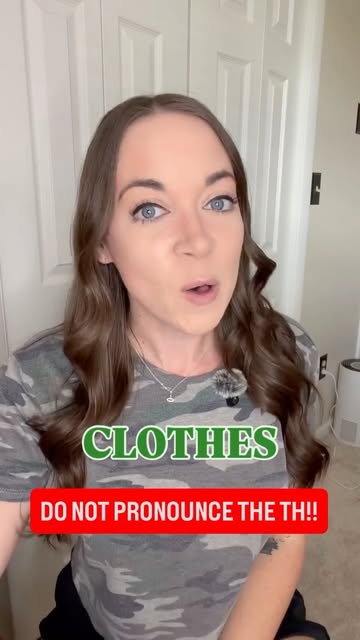
Clothes. The TH is silent in normal American speech. Clothes sounds exactly like close, the verb: KLOHZ. Students try to say KLOH-thz, which is nearly impossible even for native speakers and marks the word instantly. If you want to hear the difference between this and words where the TH does sound, my guide on how to pronounce TH covers every position.
Foreign. Two syllables, FOR-in. The G is silent, the EI is a short ɪ, and the stress is on the first syllable. I hear for-AYN and FOR-eye-n weekly. The same pattern lives in sovereign and reign.
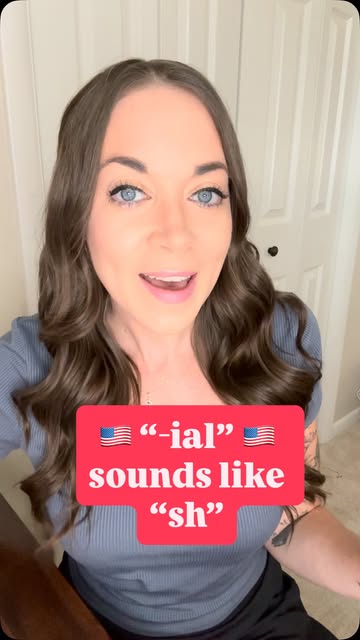
Ancient. AYN-shint. The C becomes sh because it sits before -ient, the same thing that happens in efficient and sufficient. Students say AN-see-ent or AN-chent. Neither is close.
Worcestershire. The famous one. WUSS-ter-sher, three syllables, and the middle -ce- vanishes completely. English place names are the extreme case of spelling as history: Leicester is LES-ter, Gloucester is GLOSS-ter, Greenwich is GREN-itch. You cannot derive any of them. You learn them because you hear them.
Comfortable. Three syllables in American speech, not four: KUMF-ter-bul. The -or- is swallowed and the T and R swap places in the mouth. Vegetable does the same: VEJ-tuh-bul. Wednesday is WENZ-day. February is FEB-yoo-ery for most Americans, with the first R quietly gone.
Receipt, debt, subtle, doubt. The B and P are decorations from Latin. ri-SEET, DET, SUT-l, DOWT. Subtle in particular is a word professionals use in emails and then avoid saying aloud because they are not sure. It is SUT-l, rhyming with shuttle.
A related trap is the spelling that is not silent but does not sound the way it looks. CC before E or I splits into two sounds, ks: accept is ak-SEPT, success is suk-SESS, accident is AK-si-dent. Students who say a-SEPT for accept are heard as saying except, which is a different word with a different meaning, and in a contract discussion that matters.
SC before E or I loses the C: science, scene, scissors, muscle, fascinate. CH in Greek-origin words is a hard K: chemistry, architect, chaos, character, stomach. And in French-origin words it is sh: chef, machine, Chicago, brochure. The same two letters, three sounds, and the only clue is where the word came from. Many of these show up in my list of the words advanced learners still mispronounce, which is a good next read if you recognize yourself in this section.
Silent letters are not only a problem in rare words. Several common workplace words have a syllable that the spelling shows and the mouth skips, and saying that extra syllable is one of the quickest ways to sound less fluent than you are.
| Word | Looks like | Sounds like |
|---|---|---|
| business | bus-i-ness | BIZ-nis, two syllables |
| every | ev-er-y | EV-ree, two syllables |
| different | dif-fer-ent | DIF-rint, two syllables |
| interesting | in-ter-est-ing | IN-tris-ting, three syllables |
| chocolate | choc-o-late | CHOK-lit, two syllables |
| separate (adj.) | sep-a-rate | SEP-rit, two syllables |
| temperature | tem-per-a-ture | TEM-pruh-cher, three syllables |
| laboratory | lab-o-ra-to-ry | LAB-ruh-tor-ee, four syllables |
The pattern behind most of these is that an unstressed vowel next to R or L gets dropped entirely. This is a cousin of the schwa, and it is why word stress matters so much: once you know which syllable is stressed, you can predict which neighbors are likely to disappear. I go through the professional list in more detail in business English words you are probably mispronouncing.
A list of tricky words helps for those words. What changes your English permanently is a different relationship with spelling, and that takes a method.
Step 1: hear before you read. When you meet a new word, look it up in a dictionary that plays audio, and listen twice before you look at the phonetic spelling. Say it three times with the audio, then look at the letters. This order matters. If you read first, your eyes decide the pronunciation and your ears only confirm it.
Step 2: write your own spelling. Next to every word in your vocabulary notes, write how it sounds in your own system, the way I write KUMF-ter-bul in this article. Capital letters for the stressed syllable. Your notes should look like a pronunciation guide, not a spelling list. Students who do this stop making the same mistake twice, because the wrong pronunciation never gets written down.
Step 3: test your guesses out loud. Once a week, take five unfamiliar words, guess the pronunciation aloud, record it, then check against audio. Keep score. The goal is not to be right. It is to find out which guessing habits are wrong: maybe you always pronounce a final E, or say every syllable, or trust GH. Every wrong guess with a pattern behind it is a pattern you can fix.
The step my students cannot do alone is the diagnosis in step three, because the habits are invisible from inside. In a lesson I hand a student a short paragraph full of these words and listen to them read it cold. Within a minute I can usually name the two or three spelling habits that generate most of their mistakes, and from there the fix is targeted rather than a long list to memorize.
Day one: read this sentence aloud and record it. "Honestly, the foreign chef's ancient recipe for salmon with Worcestershire sauce was subtle, but the comfortable clothes made the whole evening worth it." Check each marked word against the pronunciations above. Days two to six: pick one silent-letter pattern a day from the rules table, find five words you actually use that follow it, and say each one in a sentence. Day seven: record the same sentence again and compare. Then start your own sound-spelling notes for every new word from now on.
If you would like me to listen to your cold read and tell you which spelling habits are producing your mistakes, book a first lesson. It is 50 minutes for $25, and the reading diagnostic takes about ten of them. Everything about how I teach is on my page.
About half follow reliable patterns: silent K before N, W before R, B after M at the end, G before N, and GH in the middle of a word. The other half are individual words like clothes, foreign, ancient and receipt that you learn as sounds. Learn the patterns first, then the individual words you actually use.
In normal American speech, yes. Clothes sounds like close, the verb, pronounced "KLOHZ." Some careful speakers add a very light TH, but trying to pronounce a full "th" plus "z" sounds strained and marks you as a learner. Say it like close and move on.
"WUSS-ter-sher," three syllables, with the middle "-ce-" completely silent. Many Americans shorten it further to "WUSS-ter" when talking about the sauce. British place names in general cannot be worked out from spelling; you learn them by hearing them.
Only at the end of a word or syllable: laugh, enough, tough, rough, cough. In the middle of a word after a vowel, GH is silent: night, thought, daughter, through. At the start of a word it is a plain hard G, as in ghost.
Because you learned them by reading, and the wrong pronunciation became a habit before anyone corrected it. Reading-first learners keep seeing the letters, which reinforces the mistake. The fix is to hear the word, write your own sound spelling, and say it in sentences until the new version becomes automatic.
Immersion abroad works because it forces you to speak, not because the air is English. Here is how to recreate that pressure at home in 45 minutes a day.
From a former recruiter: the 15 words to pronounce perfectly, STAR answers in 90 seconds, ten ready phrases, and a two-week mock-interview plan.
A tutor's preparation plan for presenting in English: script the first minute, rehearse the numbers, stress the key words, and practice out loud with feedback.
Private American English coaching with Ashley Curry: pronunciation, accent and confidence, built around your goals.